US Supreme Court ruling against Trump tariffs likely to impact trade partners like India?
Feb 20, 2026
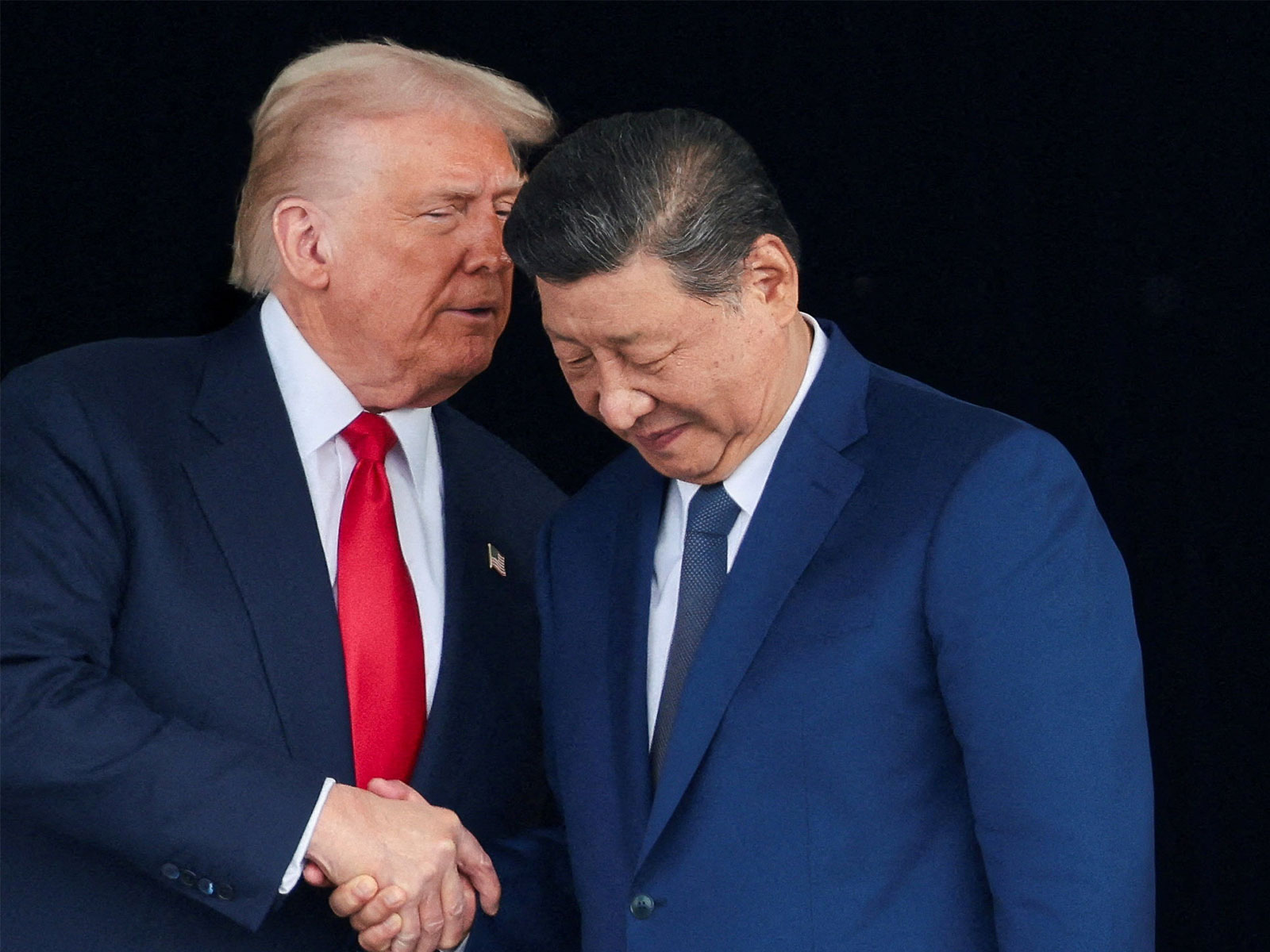
Washington DC [US], February 20 : The United States' Supreme Court on Friday ruled that President Donald Trump's sweeping tariffs on goods from nearly all partner countries violated federal law, US media reported.
As per a report in The Washington Post, the ruling deals a major blow to his signature economic policy and represents a stinging political setback.
CBS News reported that the Supreme Court in a 6-3 verdict said that the International Emergency Economic Powers Act, or IEEPA, does not authorize the President to unilaterally impose sweeping tariffs on nearly every country under a federal emergency powers law, delivering a significant blow to the president's signature economic policy.
The news outlet reported that the vote count was complicated with various justices joining different parts of the opinion.
Chief Justice John G. Roberts Jr. wrote the opinion and was joined in part by Justices Sonia Sotomayor, Neil M. Gorsuch, Elena Kagan, Amy Coney Barrett and Ketanji Brown Jackson. Justices Gorsuch, Barrett and Kagan filed concurring opinions in the case.
Justice Clarence Thomas filed a dissenting opinion, as did his fellow conservative Justice Brett M. Kavanaugh. Kavanaugh's dissent was joined by Justice Thomas and Justice Samuel A. Alito Jr.
US media outlets said that this could mean all trade deals negotiated could face issues with Congress likely to step in.
Days after the US imposed 25 per cent tariff on Indian goods, the United States on August 6 last year imposed a 25% tariff on Indian goods as a punitive measure for continued Russian oil imports.
Under the US-India Interim Trade Agreement, earlier this month, US agreed to reduce reciprocal duties on Indian goods to 18 per cent. Observers said that with the US apex court's verdict, exporters could see more relief in tariffs.
The observers also said the US apex court judgement could bring new elements in negotiations to finalise Interim Trade Agreement, which was expected to be signed next month.
"...This was largely baked in by markets hence we are seeing positive moves in US markets . Indian Gift Nifty is up over 250 points so being viewed positively . Question is what Plan B will Trump administration unleash . Refunding USD 175 bn of custom duties will impact the fiscal deficit massively . Also many investment linkages are there," Ajay Bagga, banking and market expert, said.
The United States and India announced on February 7 that they have reached a framework for an Interim Agreement regarding reciprocal and mutually beneficial trade.
The framework reaffirmed the countries' commitment to the broader U.S.-India Bilateral Trade Agreement (BTA) negotiations, launched by President Donald Trump and Prime Minister Narendra Modi on February 13, 2025, which will include additional market access commitments and support more resilient supply chains.
A Joint Statement had said that the Interim Agreement between the United States and India will represent a historic milestone in our countries' partnership, demonstrating a common commitment to reciprocal and balanced trade based on mutual interests and concrete outcomes.
According to the joint statement, India will eliminate or reduce tariffs on all U.S. industrial goods and a wide range of U.S. food and agricultural products, including dried distillers' grains (DDGs), red sorghum for animal feed, tree nuts, fresh and processed fruit, soybean oil, wine and spirits, and additional products.
The United States will apply a reciprocal tariff rate of 18 percent under Executive Order 14257 of April 2, 2025, as amended, on originating goods of India, including textile and apparel, leather and footwear, plastic and rubber, organic chemicals, home decor, artisanal products, and certain machinery. And, subject to the successful conclusion of the Interim Agreement, will remove the reciprocal tariff on a wide range of goods identified in the Potential Tariff Adjustments for Aligned Partners Annex to Executive Order 14346 of September 5, 2025, as amended, including generic pharmaceuticals, gems and diamonds, and aircraft parts.