Zero tariff puts farmers' future at risk, centre silent: Himachal Minister of Public Works Vikramaditya Singh
Feb 03, 2026
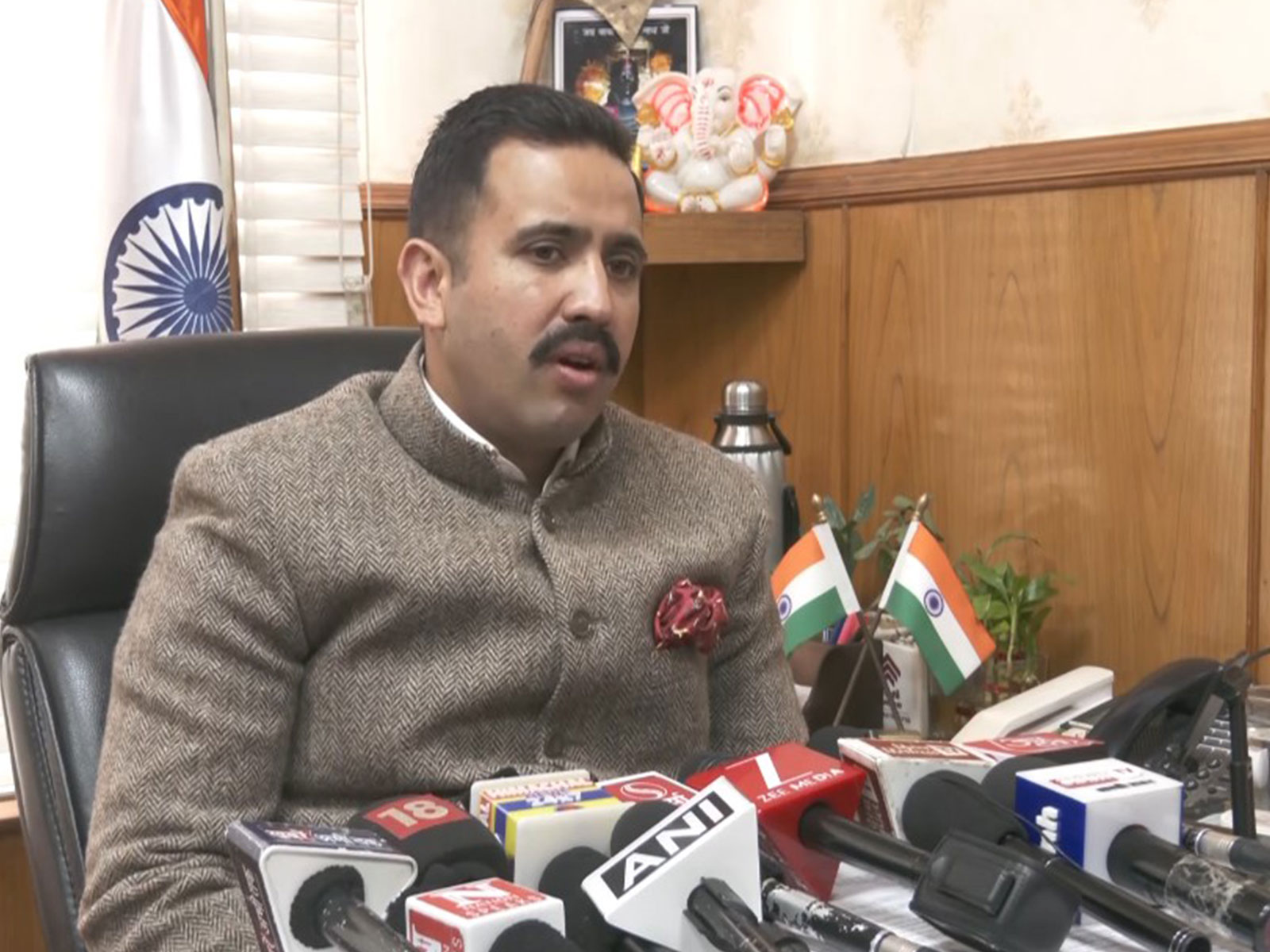
Shimla (Himachal Pradesh) [India], February 4 : Minister of Public Works and Urban Development in Himachal Pradesh, Vikramaditya Singh, on Tuesday stated that the prospect of a zero-import duty on agricultural products under a potential India-US trade agreement has placed the country's agrarian economy in a highly precarious and compromising position.
His remarks came after the announcement of the India-US trade deal.
US President Donald Trump has claimed that India has committed to large-scale purchases of American energy, technology, and agricultural goods while moving toward eliminating tariff and non-tariff barriers.
Vikramaditya Singh further stated that if such commitments are made without extensive public consultation, parliamentary debate, or dialogue with farmers' representative bodies, it would constitute a direct betrayal of the interests of crores of Indian farmers, horticulturists, and agricultural labourers.
India's agricultural landscape continues to rest on small and marginal farmers. Forcing them to compete directly with the heavily subsidised, corporate-controlled farm sector of developed nations cannot be justified under any fair economic principle, he added.
If American agricultural commodities--particularly grains, oilseeds, pulses, fruits, vegetables, and dairy products--enter the Indian market at zero or minimal import duty, the immediate outcome would be a slump in domestic prices, a further contraction in farmers' income, and an intensification of the already pressing rural employment crisis. It is equally worrisome that policy areas long considered sensitive in India, such as dairy and select agricultural products, also appear to be under pressure to yield to external demands, as per Singh's statement.
He pointed out that the Central Government has so far neither placed the official draft of this so-called agreement before the nation nor clarified which agricultural products are being considered for zero-tariff treatment or how such measures would affect domestic producers. While the US Agriculture Secretary is publicly assuring American farmers of the prospective benefits of this deal, the Government of India remains silent--leaving its own farmers vulnerable amid rising input costs, natural calamities, and stagnating minimum support prices.
The message is unambiguous: under the current regime, India's farm sector and rural economy have been reduced to mere bargaining chips on the negotiating table--whose price will be paid by Indian farmers through sweat, struggle, and mounting debt, his statement mentioned.
The minimum requirement of democratic policymaking is that any international trade agreement of this magnitude must first undergo thorough discussion in Parliament, involve consultation with Chief Ministers--especially from agrarian states--and seek inputs from farmers' unions, cooperatives, and agricultural experts, Singh said.
He further added that the reality today, however, is the exact opposite--decisions are being made behind closed doors, announcements are flaunted on foreign stages or private social media platforms, and the farmers, horticulturists, and rural youth of India are left only to bear the consequences. This not only undermines the federal spirit of the Constitution but also abdicates the government's constitutional duty to safeguard the livelihoods of farmers and strengthen the agricultural sector.
In sum, the proposed zero-tariff arrangement and the one-sided assertions surrounding it have made it abundantly clear that India's agricultural economy is being pushed into deep uncertainty and compromise. The government's failure to show transparency, firmness, and clarity in defending farmers' interests is deeply distressing. Unless the Centre immediately initiates a process of clarification, reconsideration, and broad-based dialogue, the consequences in the coming years will be grave--not only for farmers' incomes and rural livelihoods but also for the nation's food security and social stability, Singh said.
Meanwhile, Commerce and Industry Minister Piyush Goyal has said Prime Minister Narendra Modi has always championed the agriculture and dairy sectors, safeguarding their interests, and noted the sensitive factors of India's economy, particularly agriculture and dairy, have been protected in the India-US trade deal.
Addressing a press conference, he said that MSMEs, the country's engineering sector and sectors such as textiles, gems and jewellery, leather goods and marine goods will all get numerous opportunities.
"PM Modi has always championed both the agriculture and dairy sectors, safeguarding their interests and working tirelessly to ensure a bright future and ample opportunities for the people in this sector. I am pleased that the entire country understands and appreciates this, and it resonates deeply with them. The sensitive factors of India's economy, particularly agriculture and dairy, have been protected," he said.
"We have seen reports from across the country; there is widespread enthusiasm. All those involved in India's exports, those connected to India's technology sector, those who want to bring modern technology to India or become part of global supply chains and global value chains, those who want to establish global capability centers, and those who want to invest in various sectors, especially labor-intensive ones that provide employment to millions of people - all are excited by this," he added.