HP: Tibetan government in-exile observes Tibetan Calligraphy Day; holds exhibition to promote their language, script
May 01, 2026
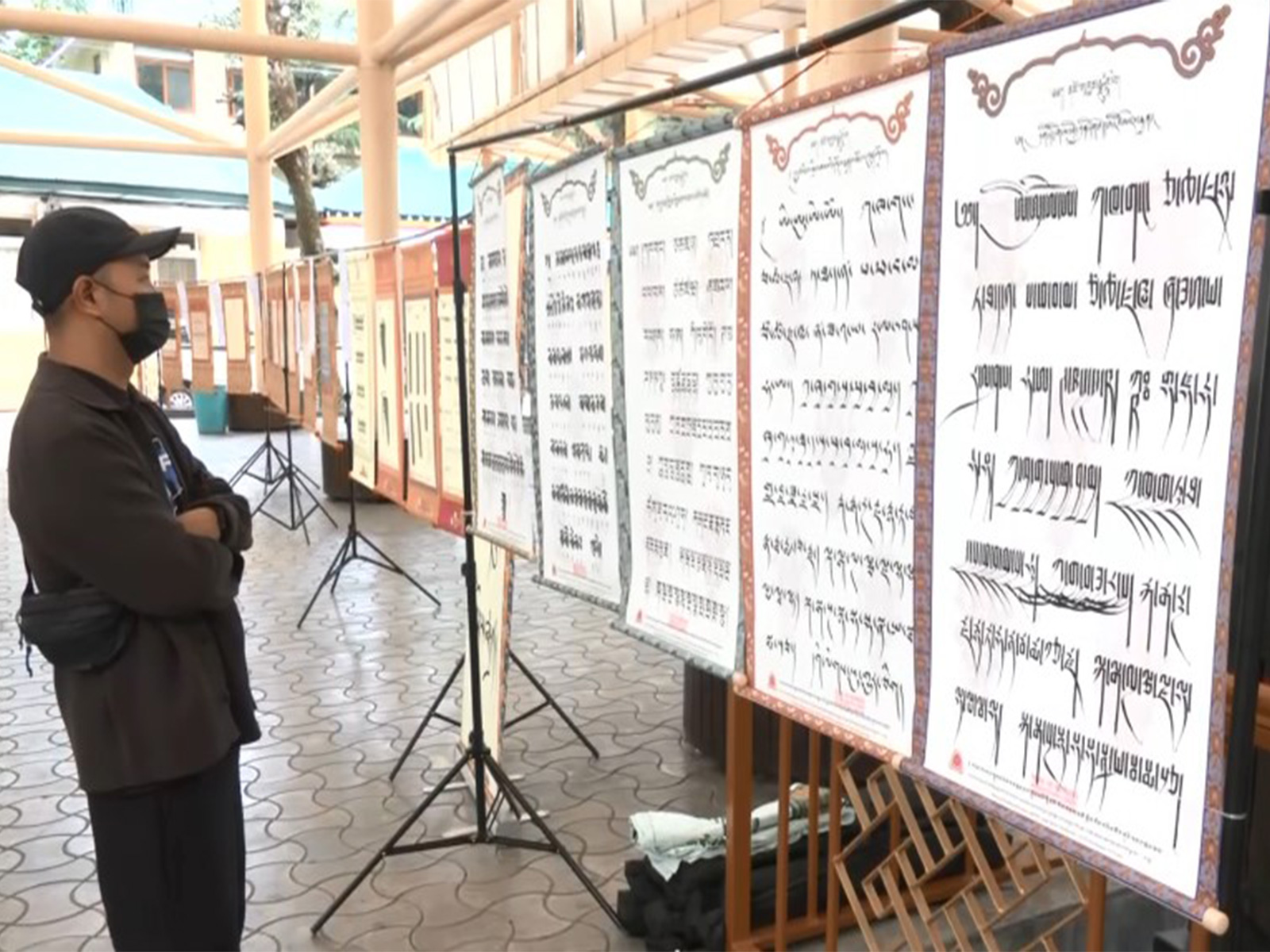
Dharamshala (Himachal Pradesh) [India], May 2 : The Department of Information and International Relations (DIIR) of the Tibetan government in exile concluded a two-day celebration of Tibetan Calligraphy Day on Friday with an exhibition at the main Tibetan temple, Thekchen Choeling Tsuglakhang's courtyard in McLeodganj of Dharamshala.
The event was organised to promote and preserve the Tibetan language and script.
Karma Wangdue, a calligraphy teacher from Palpung Sherabling monastery, told ANI the purpose of the celebration is to preserve the language and script.
"We are holding an exhibition on Tibetan script. We observe Tibetan calligraphy or script day on April 30 because we have 4 vowels and 30 consonants in Tibetan script, so we celebrate it on the April 30. We, the Palpung Sherabling monastery has celebrated the day yesterday in the Tibet museum with the Tibetan government in exile, and since more people visit the Dalai Lama's temple, we have organised an exhibition here for their information today. Our purpose is to preserve our language and script. His holiness the Dalai Lama has also focused more on it by opening schools and monasteries in-exile," he said.
He highlighted that since their religious textbooks are written in Tibetan script, preserving their language and script is an attempt to preserve their religion.
"In India, we have lots of schools and monasteries to preserve our language. The language develops our culture as well, so we are trying to inspire our younger generation towards our own language," he added.
Tenzin Dhondup, a Tibetan student who had come to explore the exhibition, highlighted it as "perfect chance to revive" their culture, adding, "It is very important for us because we consider that language and handwriting help us to understand our thoughts, and without our language and handwriting we will be erased in this world."
Dia, a Tibetan Buddhist follower, said that witnessing the calligraphic events was fascinating, and provides an opportunity to learn somethign new.
"These days, a lot of people from around the world are also learning the Tibetan language, and some of them are very fluent, so it's a very nice step to preserve their language and culture, and I think it's really helpful. So many people from around the world come here, and when they see something which is banned in some places like China, maybe they are forced to learn Chinese and thier culture, and here we are actually preserving the culture," he said.