Iran's unity in 12-day war forced "enemy" to seek ceasefire: Iranian President Pezeshkian
Jun 14, 2026
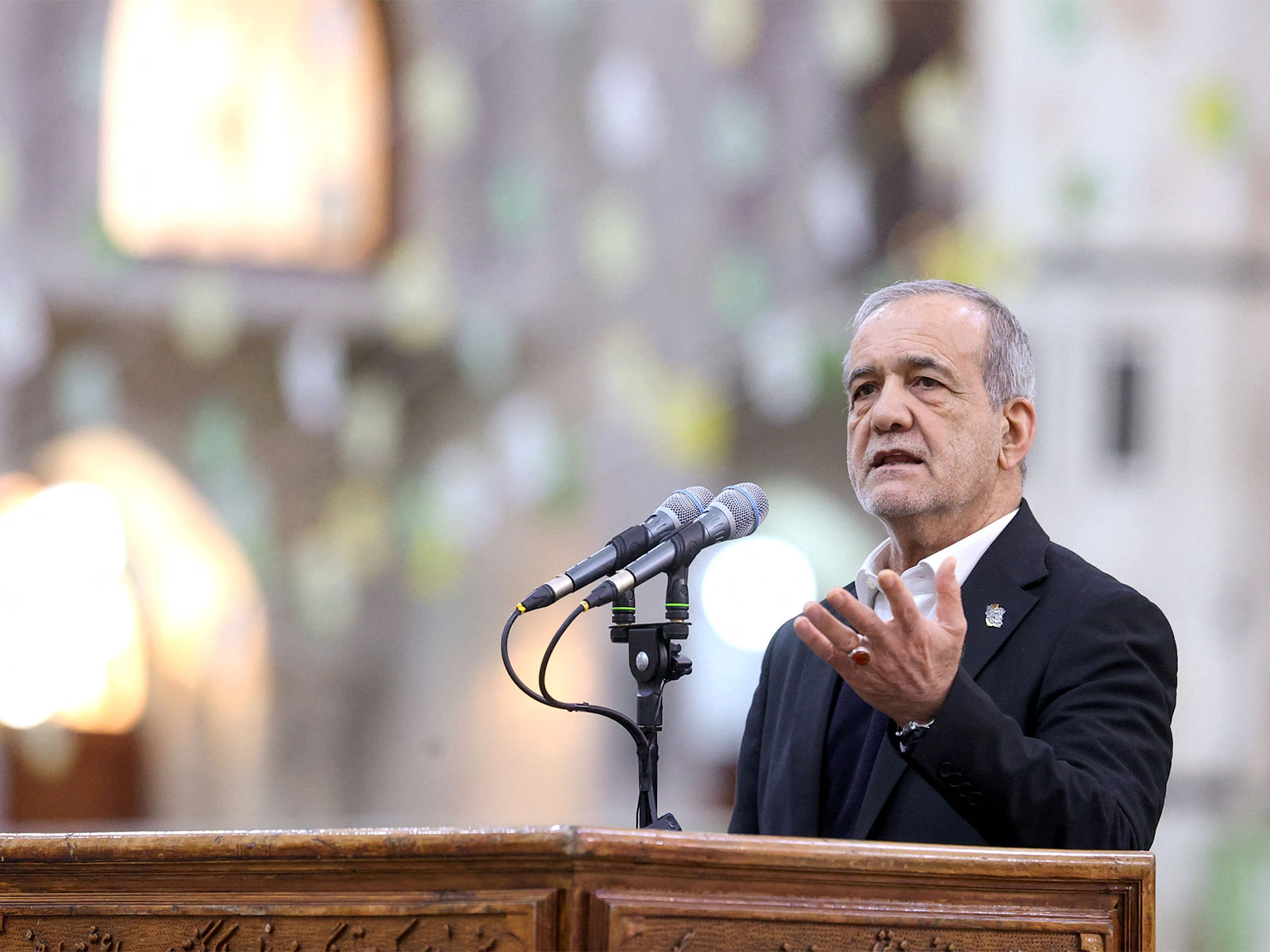
Tehran [Iran], June 14 : Iranian President Pezeshkian said that the national solidarity of the country's people during the 12-day conflict with Israel compelled Israel to seek a ceasefire, according to Iran's state news agency IRNA.
In a message on Saturday marking the first anniversary of the conflict with Israel, Pezeshkian paid tribute to those killed during it and said that Israel "had miscalculated" the impact of its "attacks" on Iran.
The president said that Israel had "assumed" that the strikes targeting senior military commanders and strategic facilities would "weaken the Iranian nation and destabilise the Islamic Republic." However, he said, "the resistance shown by the Iranian people," alongwith the leadership of the late Supreme Leader, Ayatollah Seyed Ali Khamenei, and the preparedness of Iran's Armed Forces, prevented 'those goals" and "eventually compelled the adversary to accept a ceasefire."
Describing the 12-day conflict as a "symbol of national solidarity", Pezeshkian said Iranians from different political backgrounds and viewpoints had united in defence of the country.
He also commanded the citizens for their patience amid "economic difficulties over the past year", saying his administration had continued addressing public concerns despite operating "under severe pressures."
"The government did not neglect people's problems even for a moment," Pezeshkian said, according to IRNA, adding that the officials had worked continuously to reduce "hardships and find solutions to the country's challenges."
Referring to guidance from the Supreme Leader, Ayatollah Seyyed Mojtaba Hosseini Khamenei, the president said that,"preserving national cohesion, enhancing defensive capabilities and maintaining public vigilance are essential for overcoming future challenges."
As IRNA reported, Pezeshkian expressed confidence that Iran would continue progressing by relying on "on social solidarity, the talents of its younger generations and hope for a brighter future."
Meanwhile, dozens of people staged a demonstration outside a foreign ministry office in Iran's north-eastern city of Mashhad, shouting slogans against top diplomat Abbas Araghchi following a televised interview concerning a potential peace agreement with the United States.
This domestic outrage directly followed a broadcast on state television, where Araghchi stated that the proposed agreement includes provisions for dismantling the US naval blockade on Iranian ports, which Washington had instituted following Iran's own blockade in the Strait of Hormuz.
Araghchi noted that "The administration of the Strait of Hormuz will no longer be the same as before," while maintaining that the strategic waterway remains one of Iran's "main instruments of deterrence."
Fuelling the political fire further, unverified footage circulating on social media networks concurrently depicted similar crowds gathering outside the foreign ministry headquarters in Tehran.
Protesters were seen demanding political exits, chanting "Araghchi, resign" and "Ghalibaf, resign," directed at the foreign minister and parliament speaker Mohammad Bagher Ghalibaf, who is also serving as the chief negotiator.