Nepal opposition, House Speaker at loggerheads over PM Balendra Shah's absence in Parliament
May 20, 2026
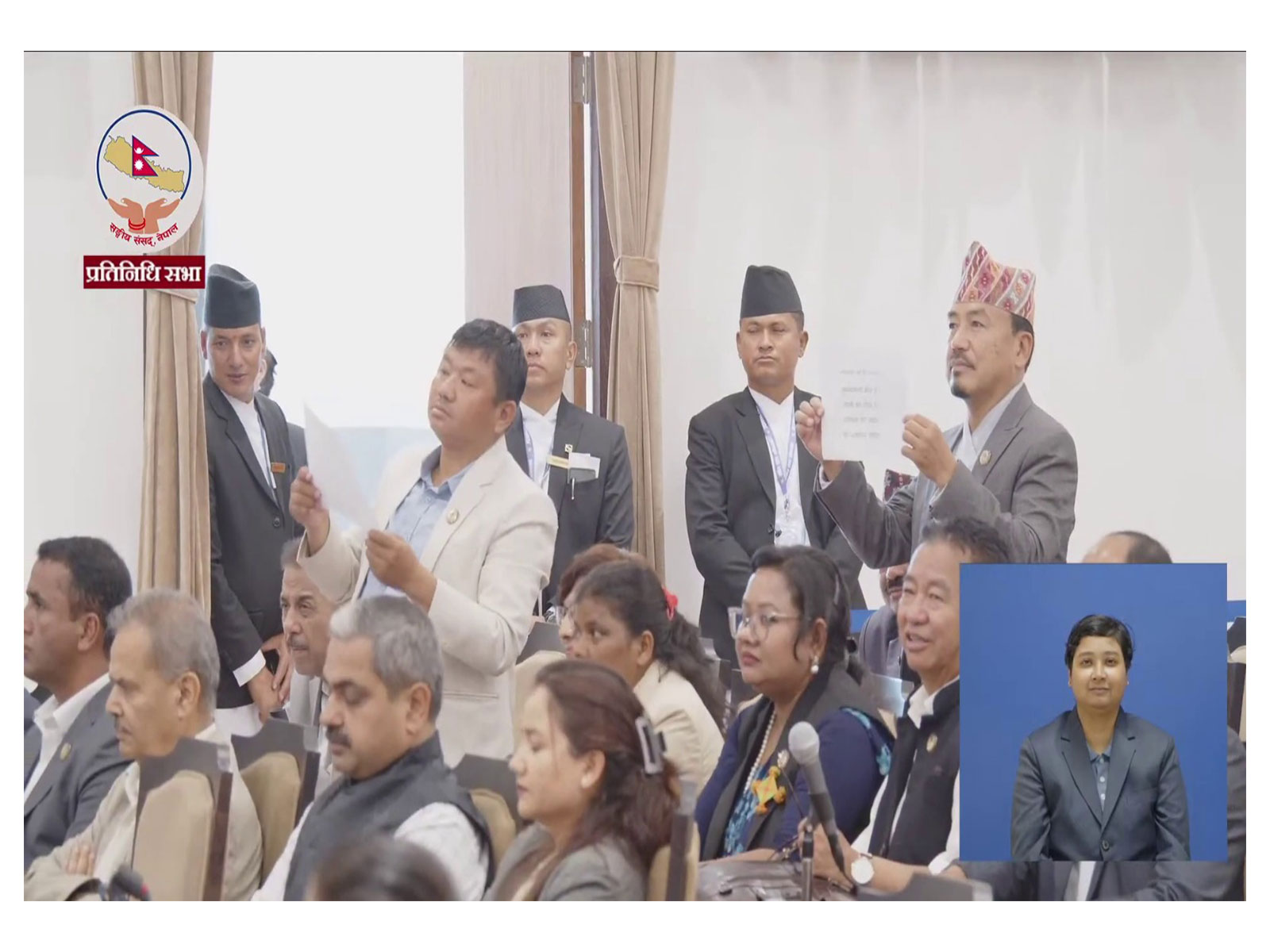
Kathmandu [Nepal], May 20 : Nepal's opposition party, the Shram Sanskriti Party, and House Speaker Dol Prasad Aryal are at loggerheads over the conduct of parliamentary meetings as protests continue over the absence of Prime Minister Balendra Shah in Parliament.
The Shram Sanskriti Party has been demanding the presence of Prime Minister Shah in parliamentary meetings, which he has continued to skip since the government presented its plans and policies earlier this month.
At the beginning of the House meeting on Wednesday as well, the chairman of the Shram Sanskriti Party, Harka Raj Rai, along with other lawmakers, stood in protest carrying placards, prompting the Speaker to issue a warning.
"As the honourable members of the Shram Sanskriti Party, including Harkaraj Rai (Harka Sampang), regularly display placards in Parliament and behave in an indecent manner, contrary to the dignity of the House, I warn the honourable members to correct their activities and behaviour in accordance with Rule 30 of the House of Representatives Rules 2079 BS," House Speaker Dol Prasad Aryal warned.
The opposition lawmakers accuse the government of refusing to remain accountable to Parliament, ignoring issues repeatedly raised in the House, and failing to ensure ministers respond to lawmakers' questions within the required timeframe.
The confrontation between the opposition and the House Speaker has continued to intensify in the House of Representatives, triggering Rule 30 of the House, under which the Speaker can caution members whose behaviour is deemed disorderly or inappropriate during parliamentary proceedings.
The opposition lawmakers have been challenging the Speaker directly, questioning whether the Chair itself had ensured implementation of Rule 15 of the same parliamentary regulations.
On Wednesday, the chair of the Shram Sanskriti Party, Harka Raj Rai, argued that lawmakers have repeatedly raised urgent public concerns during zero-hour and special time discussions, yet the government has failed to provide mandatory responses within the legally defined period.
Rule 15 of the parliamentary regulations guarantees lawmakers the right to raise contemporary and serious matters of public concern. Sub-rule (2) further states that the concerned minister must respond before Parliament within seven days.
The Shram Sanskriti Party has increasingly built its parliamentary pressure campaign around this provision, arguing that the government cannot selectively ignore issues raised by smaller parties while continuing to demand order and discipline from the opposition benches.
"We are not here to raise our personal questions; we want to ask the questions pertaining to the public to the concerned ministers, ranging from the border issues to controlling the inflation, cooperative victims, the source of the payment to them and many more questions we want to ask them. But the concerned ministers are absent from the parliament, not even during the presentation and discussion of the plans and policies, and not even while it's their turn to answer to the questions of the lawmakers and appoint someone else for it. This clearly violates rule 15 (2) of the House of Representatives Rules," chairperson of the Shram Sanskriti Party Harka Raj Rai said.
Rai further warned that the protest campaign would not stop until the government demonstrated responsibility and accountability toward the legislature. The lawmaker also claimed that parliamentary rules were not being properly implemented in the case of the government.
He further urged Speaker Dol Prasad Aryal to issue a ruling requiring the Prime Minister and ministers to attend House meetings.