OPEC+ announces 188,000 barrels per day output increase in June after UAE exit
May 03, 2026
Vienna [Austria], May 3 : Seven OPEC+ countries have decided to increase their oil production cap by 188,000 barrels per day in June, in response to the withdrawal of the United Arab Emirates from the bloc, OPEC said in a statement on Sunday.
The countries- Saudi Arabia, Russia, Iraq, Kuwait, Kazakhstan, Algeria and Oman -- made the decision during a virtual meeting today to review global market conditions and outlook.
The increase, which will be implemented in June 2026, is part of adjustments to the additional voluntary production cuts first announced in April 2023.
In their collective commitment to support oil market stability, the seven participating countries decided to implement a production adjustment of 188 thousand barrels per day from the additional voluntary adjustments announced in April 2023. 
The group said the voluntary adjustments could be returned gradually, either in part or in full, depending on "evolving market conditions and in a gradual manner."
Reaffirming their commitment to oil market stability, the countries stressed the need for a cautious and flexible approach, noting that production levels could be increased, paused or reversed as necessary, including adjustments introduced in November 2023.
The seven OPEC+ countries also said the move would provide an opportunity to accelerate compensation for any overproduction since January 2024.
They reiterated their commitment to full compliance with the Declaration of Cooperation, with output levels to be monitored by the Joint Ministerial Monitoring Committee.
They also confirmed their intention to fully compensate for any overproduced volume since January 2024.
Further, the seven countries will hold monthly meetings to review market conditions, conformity, and compensation.
They will hold a meeting on June 7 this year.
The announcement comes in the first meeting of the cartel since the departure of the United Arab Emirates on May 1.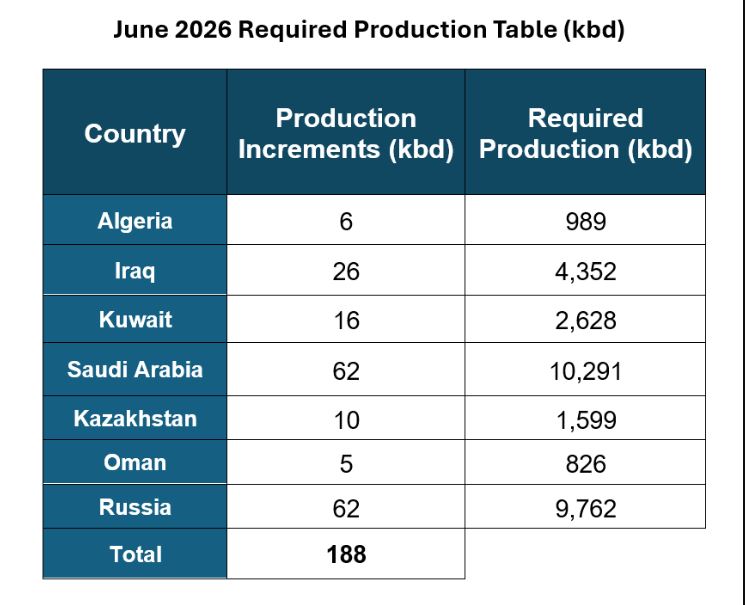
Since the beginning of the Iran war on February 28, Gulf oil supplies continue to remain disrupted as the Strait of Hormuz a key shipping route for global oil and gas supplies, remains effectively closed.